
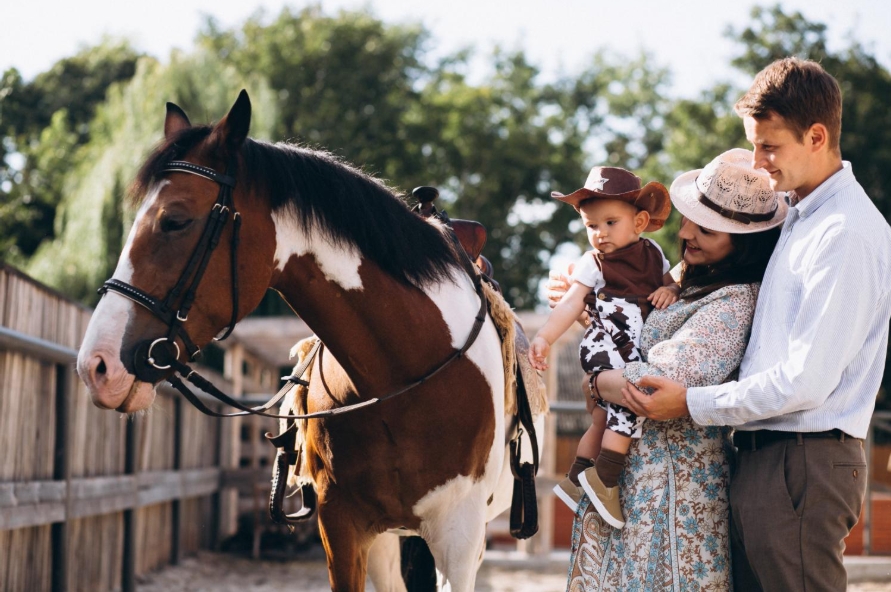
As international travel stabilizes after several years of disruption, a quieter trend has begun to draw attention among researchers studying rural development: the economic and cultural impact of horse riding holidays. While these trips occupy only a small share of the global tourism market, they are increasingly recognized for their influence on remote regions where traditional land-based livelihoods are evolving. The shift reflects a broader pattern in which rural areas seek forms of tourism that align with their heritage rather than replace it.
Many communities historically dependent on farming, grazing or small-scale ranching are adapting a portion of their land use to accommodate riding routes, not as a departure from their identity but as an extension of it. In countries where horse culture has deep roots, such as Iceland, Argentina, Romania and parts of Canada, local operators say these trips allow residents to maintain longstanding equestrian practices even as economic pressures push younger generations toward urban areas.
A Post-Pandemic Reassessment of Open-Space Tourism
Rural development specialists note that the renewed interest in open-space travel is partly connected to post-pandemic behavioral shifts. The OECD reported that interest in outdoor and nature-linked tourism rose significantly as travelers sought settings that offered both physical space and cultural depth. Horse riding holidays fit this need because they unfold in low-density environments where local guiding traditions are integral to the experience.
Unlike adventure activities designed primarily for sport, long-distance riding depends on knowledge that is transmitted across generations: reading terrain, understanding herd behavior and navigating remote landscapes without heavy infrastructure. For many communities, tourism revenue supports the preservation of this knowledge at a time when traditional horse-related work, herding, hauling or agricultural labor, has diminished.
Cultural Knowledge as an Economic Asset
Some regions have formalized this connection. Local organizations in parts of Central Asia, for example, have developed training programs to ensure that young guides learn equestrian skills alongside historical interpretation. They view tourism not only as a source of income but as a platform for cultural continuity. Similar patterns have emerged in South American estancias where horsemanship is tied to regional identity, and in European mountain villages where multi-day rides follow centuries-old trade or shepherding routes.
In these settings, the role of tour coordinators has evolved as well. Companies like Globetrotting work with local guides to help structure itineraries, clarify safety expectations and facilitate connections between riders and communities. Their involvement is often logistical: ensuring that the travel infrastructure supports local cultural practices rather than diluting them. Operators say this balancing act, honoring heritage while accommodating visitors, remains one of the central challenges in equestrian tourism.
Environmental Pressures and Land Management
As with any form of rural tourism, growth brings new environmental considerations. Land management experts warn that increased footfall, or hooffall, can strain fragile habitats, particularly in mountainous or arid zones. A study published by the European Environment Agency notes that even low-impact activities require clear trail management plans to avoid erosion, vegetation loss and disruption to wildlife.
Horse riding holidays present both strengths and limitations in this regard. Their relatively slow pace and dispersed movement can reduce concentrated wear, but only when routes are chosen carefully and adjusted for seasonal conditions. Landowners and guides often coordinate informally, relying on local knowledge to determine when trails can support riders and when they need rest. As climate patterns become less predictable, these decisions are increasingly complex.
Some communities have developed hybrid systems, blending traditional guidance with environmental monitoring tools. In parts of New Zealand, for example, ranchers incorporate soil moisture data and seasonal projections when planning multi-day rides. These adaptations highlight the ongoing negotiation between tourism growth and environmental stewardship.
The Realities of Maintaining Horse Labor
Maintaining horses for long-distance travel introduces another economic dimension. Unlike adventure tourism activities reliant on equipment, horse-based travel depends on living animals that require year-round care. For small rural operators, veterinary services, feed and shelter represent a fixed cost regardless of seasonal tourism variability. That economic unpredictability influences how communities design riding routes, how many travelers they accommodate and how they set expectations for visitors.
Equestrian associations across several regions have expanded training and welfare guidance to address this. Their recommendations emphasize workload limits, rest intervals and veterinary oversight as foundational elements of responsible riding tourism. While these standards are broadly accepted, implementation can vary, especially in areas where equine veterinary care is geographically limited.
Traveler Expectations and the Reality of Rural Infrastructure
Another emerging theme is the widening gap between traveler expectations and rural infrastructure. As global imagery of horse riding holidays circulates on social media platforms, some travelers arrive with a cinematic understanding of the experience but little awareness of the practical conditions involved. Rural operators report situations in which visitors underestimate the physical demands of riding or expect amenities that remote communities cannot realistically provide.
This gap has encouraged researchers to call for clearer communication strategies. Some regions have introduced orientation sessions where riders learn basic horsemanship and land-use customs before setting out. These efforts aim to protect both travelers and local ecosystems while preserving the authenticity that draws visitors in the first place.
A Shift in How Travelers Engage with Place
Despite the logistical and environmental challenges, horse riding holidays continue to gain attention not for their novelty but for the type of engagement they facilitate. The pace of travel, guided by animal movement rather than technology or infrastructure, creates a different relationship to place. Riders often move through working landscapes, farms, grazing areas, forest corridors, rather than designated tourist zones.
This proximity offers insight into local decision-making, such as how weather influences land use, how herds are managed or how communities adapt to shifting economic pressures. For many travelers, the experience provides a more grounded understanding of rural life than conventional sightseeing.
As rural communities worldwide consider how to balance cultural preservation with economic opportunity, horse riding holidays represent one model, modest in scale but significant in its social implications. Their growth depends on careful land management, consistent welfare standards and transparent communication between guides and travelers. But they also reflect a broader movement toward travel experiences rooted in heritage rather than spectacle.
Whether the sector expands or stabilizes, it highlights an important shift in how travelers value the rural world. They are not only seeking remote landscapes; they are seeking the knowledge, rhythms and interdependence that define life within them.
Media Contact
Company Name: Globetrotting
Email: Send Email
Country: Australia
Website: https://www.globetrotting.co/