
Key Parameters and Testing Standards Analysis
In the packaging and transportation industry, the single-wing Drop Tester is a crucial device for evaluating the impact resistance of product packaging. By simulating freefalls that products may experience during transportation and handling, it helps manufacturers optimize packaging design and reduce the risk of damage. So, how do you choose a high-performance single-wing drop tester? This article will analyze key parameters and testing standards to help you make an informed decision.
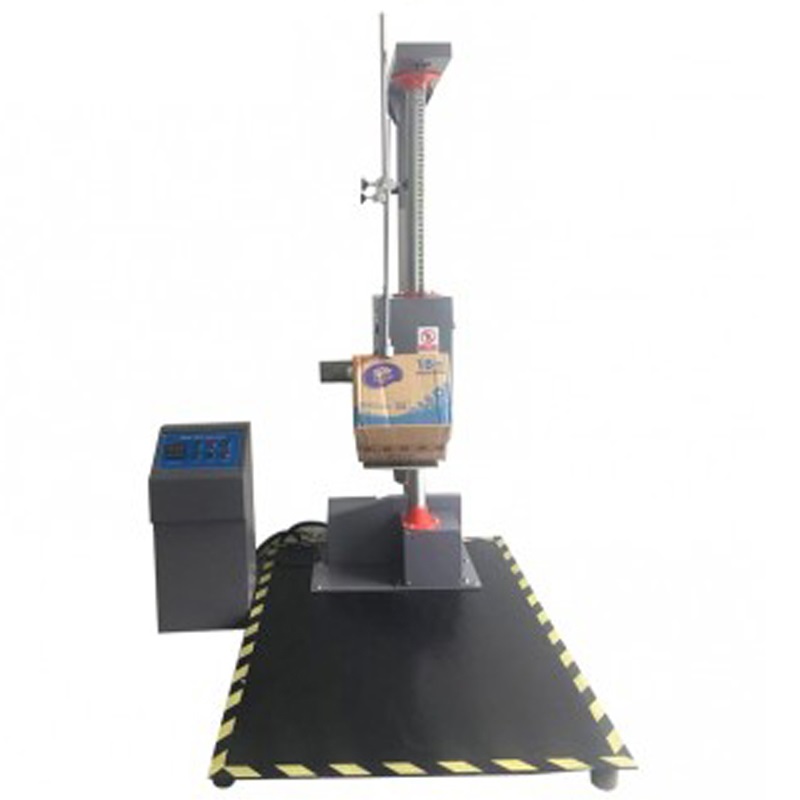
I. Working Principle and Core Functions of the Single-Wing Drop Tester
The single-wing drop tester is a specialized testing device designed to simulate the impact of drops that packaging may experience during transportation and handling. Its core working principle involves using an electric lifting device to raise the test sample to a preset height, then allowing it to fall freely under predetermined conditions, colliding with the impact platform, thereby assessing the damage to the packaging and its contents.
Modern single-wing drop testers are typically equipped with a digital height display and a height tracking decoder, enabling precise control of the drop height, with an error of no more than 2% or 10mm from the preset height. The equipment adopts a single-column or single-arm structure design, featuring electric reset and electrically controlled drop functions. It is easy to operate and provides reliable test results. During testing, it can simulate three drop states for packaging: face, corner, and edge, comprehensively evaluating the rationality of the packaging design.
II. Key Performance Parameters - Drop Height Range: The drop height directly affects the severity of the test, typically ranging from 300mm to 2000mm. For example, electronic product packaging is usually tested at 800-1500mm, while heavy industrial packaging may require higher drop heights.
Maximum Load Capacity: Different models support different specimen weights, commonly ranging from 60 to 100kg. For testing heavy packaging (such as household appliances and machinery), equipment with a load capacity of 100kg or more must be selected.
Specimen Size Limitations: Standard models typically support specimens of 800×800×1000mm, but some equipment can be extended to 1000×1000×1000mm. The actual packaging size must be matched when purchasing. Drop AccuracyHigh-performance equipment uses encoders or digital display height tracking to ensure a drop error ≤2% or ±10mm. Low-precision equipment may lead to unreliable test results.
Impact Panel Size - The standard impact panel is approximately 1700×1200mm. It must be large enough to accommodate the specimen and have anti-slip and impact-resistant properties.
III. Core Testing Standards - The single-wing drop tester must comply with international and industry standards to ensure the comparability of test results:ISO 2248 (Packaging vertical Impact Drop Test)GB/T 4857.5 (Chinese standard for drop testing of packaging for transport)JIS Z0202-87 (Japanese Industrial Standard).
IV. Purchase Recommendations - Select the model according to your testing needs.Light packaging (e.g., electronic products): A standard model with a 60kg load capacity and a 1500mm drop height is recommended.
Media Contact
Company Name: Dongguan Huanyi Instruments Technology Co., Ltd.
Email: Send Email
Country: China
Website: https://www.huanyitestchamber.com/