

I understand the correct size of your Skid Steer Tracks is crucial for optimal machine performance, operator safety, and ensuring track longevity. I designed this guide to walk you through everything needed to accurately size and select the ideal Skid steer loader tracks for your equipment, including specialized options like Skid steer rubber tracks, across popular brands.
Key Takeaways
- Choose the right track type for your job. Rubber tracks work well on soft ground. Steel tracks are best for tough conditions.
- Measure your tracks carefully. Check the track pitch, width, and count the links. This ensures a perfect fit for your machine.
- Maintain your tracks properly. Keep them clean and check the tension often. This makes them last longer and work better.
Understanding Skid Steer Tracks Types
When I help clients choose the right tracks, I always emphasize understanding the different types available. Each track type offers unique advantages for specific applications and terrains. Knowing these distinctions helps you make an informed decision for your machine.
Rubber Tracks vs. Steel Tracks
I find that the choice between rubber and steel tracks often depends on the job site and desired performance. Rubber tracks are a popular choice for many operators. They offer excellent stability, distributing weight evenly over a larger surface. This reduces ground pressure, preventing your machine from sinking in soft or uneven terrain like mud or loose gravel. I also appreciate how rubber tracks minimize ground disturbance and soil compaction, making them ideal for sensitive environments. They provide superior traction and grip on steep slopes and slippery surfaces. High-quality rubber tracks are durable, resisting wear from heavy-duty use, which reduces maintenance costs. Their flexibility allows them to conform to ground contours, providing better traction and stability on uneven surfaces. This enhances control and maneuverability, especially in challenging conditions.
On the other hand, steel tracks offer a different set of benefits. They boast superior wear resistance, outlasting rubber counterparts, and perform exceptionally well in extreme temperatures and harsh debris. I have seen them add significant weight, which lowers the machine’s center of gravity, stabilizing heavy equipment. Steel tracks provide uniform weight distribution, reducing point loading across various terrains. They are strong and wear-resistant, leading to fewer repairs and less downtime. Often, they are self-cleaning, requiring low upkeep. However, steel tracks come with a higher initial purchase price and can cause more damage to sensitive surfaces. They also generate considerable noise and transmit vibrations to the operator, which can affect comfort.
Over-the-Tire (OTT) Tracks vs. Compact Track Loader (CTL) Tracks
I often explain the difference between Over-the-Tire (OTT) tracks and Compact Track Loader (CTL) tracks. OTT tracks are rubber or steel tracks that fit over the tires of a standard skid steer loader. You can add or remove them as needed, offering great versatility. This allows a skid steer to adapt to different terrains, letting you switch between tires and tracks. They generally cost less than purchasing a dedicated CTL. While they improve traction and reduce ground pressure compared to tires alone, their ground pressure is typically higher than CTLs.
Compact Track Loader (CTL) tracks, however, are an integrated track system that replaces wheels on a dedicated compact track loader. They are a permanent part of the machine’s undercarriage. CTLs have a higher initial purchase cost for the machine itself. They offer very low ground pressure, making them ideal for soft or sensitive surfaces, and provide excellent traction and flotation in very soft, muddy, or uneven conditions. CTLs also deliver superior stability, especially on slopes and rough terrain, and generally offer a smoother ride. While maintenance focuses on track tension, idlers, rollers, and sprockets, it can be more complex and costly. CTLs are best for continuous work on soft ground, landscaping, grading, and conditions requiring maximum flotation.
Essential Measurements for Accurate Skid Steer Tracks Sizing
I know that getting the right fit for your Skid Steer Tracks is not just about performance; it is also about safety and maximizing your investment. Precise measurements are critical. I always emphasize the importance of taking these measurements carefully. This ensures you order the correct replacement tracks for your machine.
Track Pitch Measurement
I find that understanding track pitch is fundamental. Track pitch refers to the distance between the centers of two consecutive track pins. This measurement is vital for ensuring the new track meshes perfectly with your machine’s sprocket. To accurately measure track pitch, I recommend a standard method. You should select a span of five consecutive pins. Then, carefully center-punch the first pin and the fifth pin. I use a steel tape measure to measure the total length spanning four complete pitches. I make sure to hold the tape taut and straight, reading from the center of the first punch mark to the center of the fifth. Finally, I divide the total measurement by the number of pitches spanned (for example, 870 mm by 4) to get the average pitch for that section of the chain. This multi-pitch measurement method is superior. It averages out any small variations in wear from one joint to the next, providing a more representative picture of the overall chain condition. It also minimizes the impact of small measurement errors; for instance, a half-millimeter error in total length reduces to one-eighth of a millimeter in the final calculated pitch when divided by four. For this multi-pitch measurement, a steel tape measure is the tool of choice due to its necessity over longer distances. Accurate use requires ensuring the tape is securely anchored, pulled taut, and lies parallel to the chain link plates. I take readings directly from above to avoid parallax error. While large Vernier or digital calipers are superior for single-pitch measurements, they are impractical for multi-pitch measurements due to their size and cost. Therefore, an ideal toolkit includes both calipers for quick checks and a tape measure for serious wear analysis using the multi-pitch method.
Track Width Determination
I often explain that track width significantly impacts your machine’s stability and performance across different terrains. Choosing the correct width is crucial for optimal operation.
| Track Width Type | Ground Pressure | Ideal Terrain | Traction Efficiency |
|---|---|---|---|
| Narrow Track | Higher | Firm/Paved | Moderate |
| Medium Track | Balanced | Mixed Terrain | High |
| Wide Track | Lower | Soft/Muddy | Very High |
Track design directly influences skid steer stability by determining the center of gravity and overall machine balance. Wider tracks contribute to a lower center of gravity. This provides a more stable stance, especially when operating on slopes or uneven terrain. This stable track geometry helps reduce vibration, improves operator comfort, and is crucial in preventing tipping during heavy lifting operations. The width of the track also dictates ground pressure and flotation. Wider tracks are effective in preventing the machine from sinking in soft conditions like mud or snow. Narrower tracks offer enhanced agility for confined spaces. Operators often choose wide tracks for demanding environments such as forestry, construction, or farming to ensure stability on uneven ground. Narrower tracks are preferred for urban or indoor sites where maneuverability is a priority.
Counting Track Links
I always stress the importance of accurately counting track links. This step is critical for ensuring the replacement track fits correctly. A miscount can lead to misalignment, negatively impacting the track’s performance and lifespan. Here is the procedure I follow:
- Locate the individual segments (lugs) on the inner circumference of the track that connect to the sprocket.
- Carefully count each lug to determine the total number of links.
- Double-check the count and mark each link as it is counted to prevent errors.
- Inspect for any missing or damaged links, as these will hinder proper track movement and must be addressed.
Accurately counting the track links is crucial for ensuring the replacement track fits correctly. A miscount can lead to misalignment, negatively impacting the track’s performance and lifespan. Once I determine the number of links, I use it in conjunction with the track’s pitch measurement to calculate the inner circumference (Inner Circumference = Pitch (mm) × Number of Links). This calculation helps confirm measurements before purchasing a new track, ensuring proper fitment. I have seen common mistakes during this process. These include:
- Miscounting Links: Always double-check your count and mark links as you go to avoid inaccuracies.
- Incorrect Pitch Measurement: Ensure pitch is measured from the center-to-center of the lugs, not the gaps.
- Overlooking Guide System and Roller Type: Verify that these components match the track specifications.
Machine Model and Serial Number Importance
I cannot overstate the importance of your machine’s model and serial number. These details are like your machine’s DNA. They provide specific information about its exact configuration, including the original track specifications. Manufacturers often make subtle changes to track designs or undercarriage components even within the same model line over time. The serial number helps identify the precise version of your machine. This ensures you get tracks that are a perfect match. I always recommend having this information readily available when you are looking to purchase new tracks. It eliminates guesswork and prevents costly errors.
Brand-Specific Skid Steer Tracks Fitment Guides
I know that each manufacturer designs its machines with specific track requirements. This means a “one-size-fits-all” approach rarely works. I always advise my clients to consult brand-specific guidelines. This ensures they get the perfect fit for their equipment. Let’s explore the track fitment details for some of the most popular skid steer brands.
Bobcat Skid Steers Track Sizes
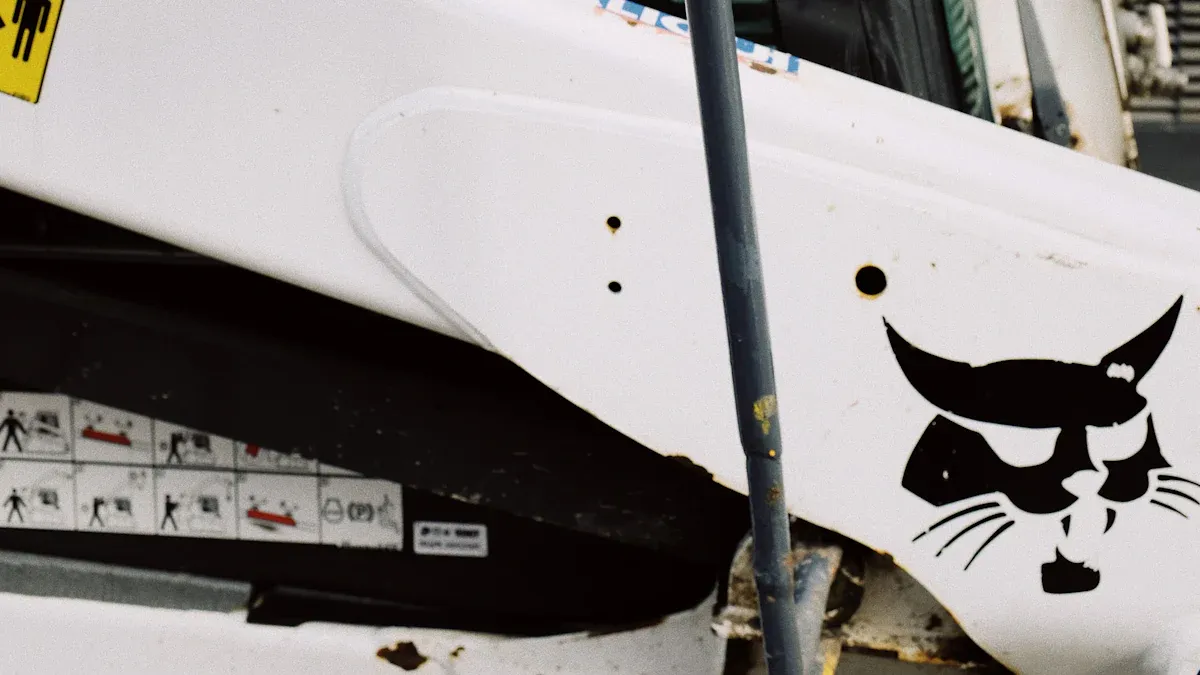
When I work with Bobcat skid steers, I find that their track sizes vary significantly across models. Bobcat offers a wide range of compact track loaders, and each model has precise track specifications. I always recommend checking your machine’s operator’s manual first. This manual provides the exact track width, pitch, and number of links for your specific model. Bobcat often provides options for different track patterns. These patterns are designed for various applications, from general construction to landscaping. I also pay close attention to the undercarriage type. Some Bobcat models might have different roller configurations, which affects track compatibility. Always have your model and serial number ready. This information helps suppliers identify the correct replacement tracks.
CAT Skid Steers Track Dimensions
Caterpillar (CAT) skid steers are known for their robust performance. I have found that CAT offers several track options to optimize machine performance for different jobs. When selecting tracks for CAT machines, I consider the tread pattern. For example, CAT offers Block Tread tracks. These are durable and suitable for many applications. However, I note they might not be ideal for snow removal. Another option is the Bar Tread. I see this as a good all-season track. It performs well in snow, causes low ground disturbance, and leaves a good finish. It also provides a smoother ride on hard surfaces.
CAT also categorizes tracks by duty level. They offer General Duty Tracks. I recommend these for customers who accumulate fewer operating hours. They help reduce owning and operating costs. For more demanding work, Heavy Duty Tracks are available. These come in narrow or wide track widths and either bar or block tread patterns. I advise considering wider options for lower ground pressure and better flotation. Narrow options are best when you need the narrowest overall machine width. For instance, I know that the Cat 239D3 Compact Track Loader, when equipped with 320 mm (12.6 inch) tracks, has a vehicle width of 66 inches (1676 mm). This detail is crucial for transport and working in confined spaces.
Case Skid Steers Track Specifications
Case skid steers are another common machine I encounter. Their track specifications are just as critical as any other brand. Case models often have specific requirements for track width and length. I always verify the track pitch and the number of links. This ensures a perfect fit with the sprocket and idlers. Case machines are used in diverse applications. Therefore, they might benefit from different tread patterns. I often guide clients to choose patterns that match their primary work environment. For example, a more aggressive tread works well in muddy conditions. A smoother tread is better for finished surfaces. Always refer to your Case model’s specific documentation. This prevents ordering incorrect tracks.
New Holland Skid Steers Track Fitment
New Holland skid steers share many similarities with Case machines due to their shared parent company. However, I still treat each New Holland model individually. I find that track fitment for New Holland machines requires the same meticulous attention to detail. You must confirm the track width, pitch, and link count. New Holland also offers various track options. These options cater to different ground conditions and operational needs. I always emphasize checking the undercarriage components. Worn rollers or idlers can affect how new tracks perform. They can also impact track longevity. Getting the right track for your New Holland machine ensures optimal traction and stability.
Kubota Skid Steers Track Requirements
Kubota compact track loaders, especially their SVL series, are very popular. I often help clients find the right tracks for these machines. Kubota designs its undercarriages for enhanced durability. They use welded-on undercarriages, which I find distinguishes them from models with bolt-on undercarriages. This design contributes to their sturdiness. Here is a quick reference for some Kubota SVL models:
| Model | Track Width (Standard) | Track Width (Wide) | Length of Track on Ground |
|---|---|---|---|
| SVL75 | 12.6 in | 15.0 in | 56.9 in |
| SVL75-2 | 12.6 in | 15.0 in | 56.9 in |
| SVL90-2 | N/A | N/A | N/A |
I always confirm these dimensions with the machine’s specific serial number. This ensures accuracy. Kubota tracks are engineered to work seamlessly with their undercarriage systems. This provides excellent flotation and traction.
Other Popular Brands Skid Steer Tracks
Beyond these major players, I also work with other popular brands like John Deere, Takeuchi, Volvo, and Gehl. Each of these manufacturers has its own unique track specifications. For John Deere, I always check the model series. Different series might have distinct track designs. Takeuchi machines are known for their robust undercarriages. I ensure the replacement tracks match their heavy-duty requirements. Volvo compact track loaders often have specific track patterns designed for their unique applications. Gehl skid steers also require careful measurement and model verification. Regardless of the brand, my advice remains consistent: always consult the manufacturer’s specifications. This ensures you select the correct Skid Steer Tracks.
Purchasing and Installing Skid Steer TracksWhere to Buy Skid Steer Tracks
I often guide clients on where to find reliable tracks. For me, reputable suppliers are key. I have found online platforms like SkidSteerSolutions.com offer a new collection of durable, wear-resistant tracks and tires from top brands such as MWE. They provide MWE Skid Steer Tires, designed for peak machine operation on long hauls and rough terrains, emphasizing durability. MWE CTL Tracks are also available for outstanding stability, a smoother ride, and maximum durability in challenging environments. Their product categories include Skid Steer CTL Tracks, Skid Steer Tires, Mini Skid Steer Tracks, and Skid Steer Over The Tire Tracks. Local dealers also offer good options.
Checking Skid Steer Tracks Quality
When I evaluate track quality, I focus on materials and warranty. High-quality tracks are composed of robust Rubber and Steel Cord. This combination ensures strength and flexibility. I also scrutinize the warranty period. A good warranty typically covers 1.5 years (18 months) or 1200 working hours, whichever comes first. This guarantee starts from the shipping date from the manufacturer. I always check the terms. I understand non-warrantable situations include damage during installation or abnormal wear. A clear warranty policy gives me confidence in the product’s longevity.
Basic Skid Steer Tracks Installation Overview
Installing tracks requires careful attention. I always ensure the machine is on a stable, level surface. I relieve tension from the old tracks first. Then, I remove them. I carefully position the new Skid Steer Tracks. I guide them onto the sprockets and idlers. Proper tensioning is crucial after installation. This step prevents premature wear. I always consult the machine’s manual for specific instructions.
Maintaining Your Skid Steer Rubber Tracks for Extended Life
I always tell my clients that proper maintenance significantly extends the life of their equipment. This is especially true for your Skid Steer Tracks. A little effort goes a long way in preventing costly repairs and downtime.
Proper Skid Steer Tracks Tensioning
I find that maintaining correct track tension is crucial. Tracks that are too loose risk de-tracking, which can be dangerous and cause damage. Conversely, overly tight tracks accelerate wear on components like sprockets and idlers. I always recommend referring to your manufacturer’s guidelines for the specific tensioning requirements of your machine. You should adjust tension regularly based on the terrain and your workload.
Regular Cleaning and Inspection of Skid Steer Tracks
I emphasize a consistent cleaning and inspection routine. Daily inspections are essential. I check the overall track condition and cleanliness, focusing on the exterior. I remove any debris, clearing large pieces and washing out the tracks. This is especially important when operating in conditions involving corrosive materials like salt from roads or snow. Daily cleaning prevents rust and deterioration of materials. Weekly, I inspect specific track system components like rollers and idlers for smooth operation. I listen for squeaks and look for flat spots. Monthly, I perform major track tension adjustments using a gauge and onboard adjustment bolts.
Optimal Operating Practices for Skid Steer Tracks
I believe proper operator training is fundamental. When operators avoid poor driving habits, they significantly improve track longevity. I teach efficient handling techniques and advise limiting practices like excessive reversing. This reduces abrasion and wear. I also recommend gentle turning techniques. Avoid sharp turns that stress sprockets and tracks. Instead, use 3-point turns. This distributes stress more evenly, minimizing wear and potential damage.
I find selecting the correct Skid Steer Tracks is fundamental for machine performance and longevity. Understanding track types, taking accurate measurements, and consulting brand-specific guidelines are key steps. I want you to confidently choose the right tracks for your machine, ensuring efficient operation and maximizing your investment.
FAQ
How often should I check my track tension?
I recommend checking track tension regularly. Adjust it based on your terrain and workload. This prevents premature wear and de-tracking.
Which track type is best for my skid steer?
I find the best track type depends on your application. Rubber tracks are great for sensitive surfaces. Steel tracks excel in harsh, abrasive environments.
Why is my machine’s serial number so important for track fitment?
I always stress the serial number. It identifies your machine’s exact configuration. This ensures you get perfectly matched replacement tracks.
Media Contact
Company Name: Gator Track Co., Ltd.
Email: Send Email
Country: China
Website: https://www.gatortrack.com/