
HAINAN, CN / ACCESS Newswire / November 12, 2026 / At the 7th Symposium on Global Maritime Cooperation and Ocean Governance (SGMCOG) held in Sanya from 6 to 8 November, speakers offered diverse perspectives on implementing the Agreement under the United Nations Convention on the Law of the Sea on the Conservation and Sustainable Use of Marine Biological Diversity of Areas beyond National Jurisdiction (the BBNJ Agreement). Discussions covered marine genetic resources, area-based management tools, environmental impact assessments, capacity-building and the transfer of marine technology. Despite differing emphases, one concern emerged: how to translate the Agreement's entry into force towards effective and equitable ocean governance.
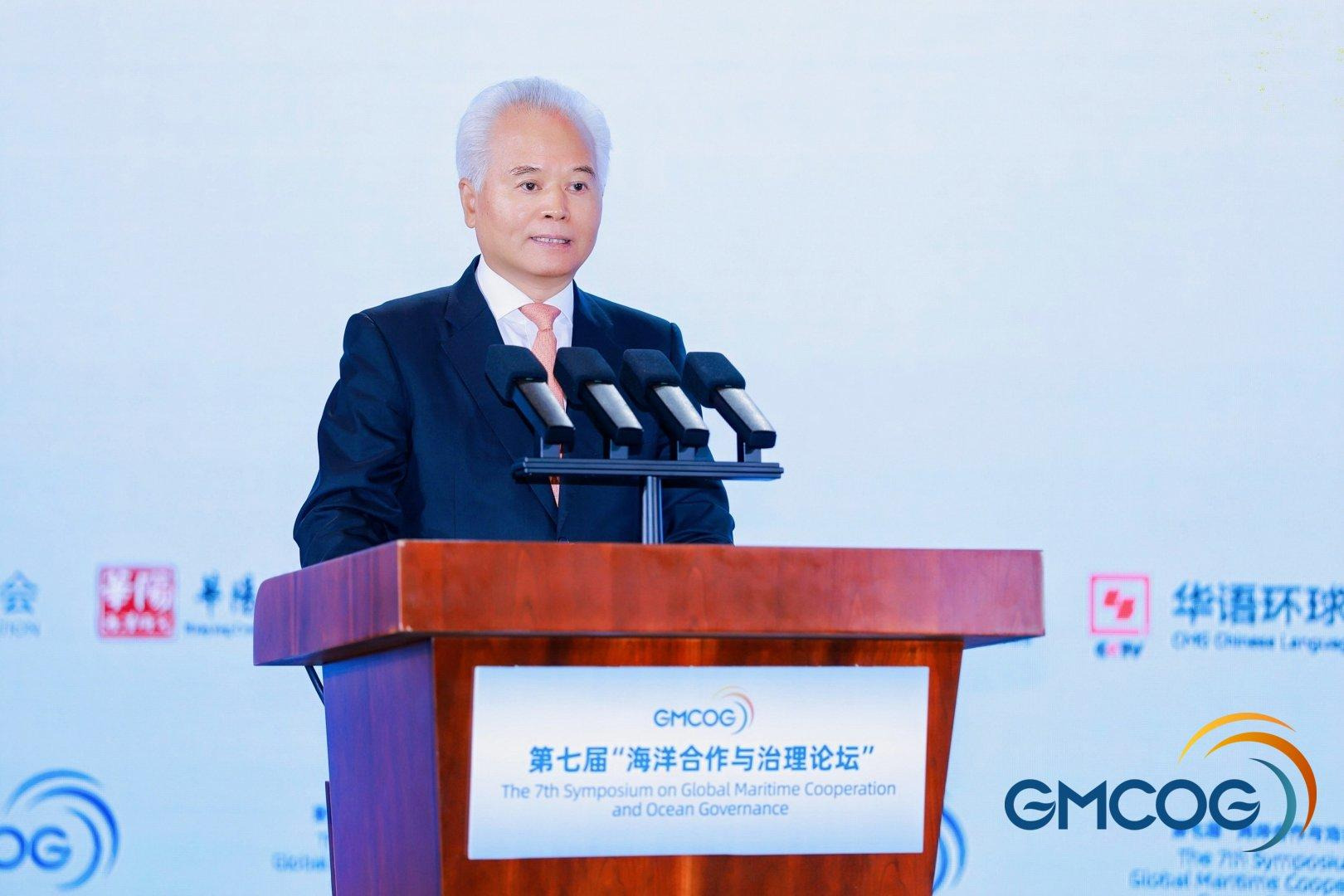
Speaking at the opening ceremony, Dr. Wu Shicun, Chairman of the Huayang Center for Maritime Cooperation and Ocean Governance (Huayang Center) and Chairman of the Academic Committee of the National Institute for South China Sea Studies (NISCSS), highlighted implementation gaps and institutional fragmentation. He cautioned that the BBNJ Agreement's entry into force would not guarantee its effective implementation, pointing to inconsistencies between BBNJ environmental impact assessment standards and deep-seabed mining rules, as well as overlaps between marine protected areas and mining zones. He therefore called for greater coordination among existing instruments and institutions.
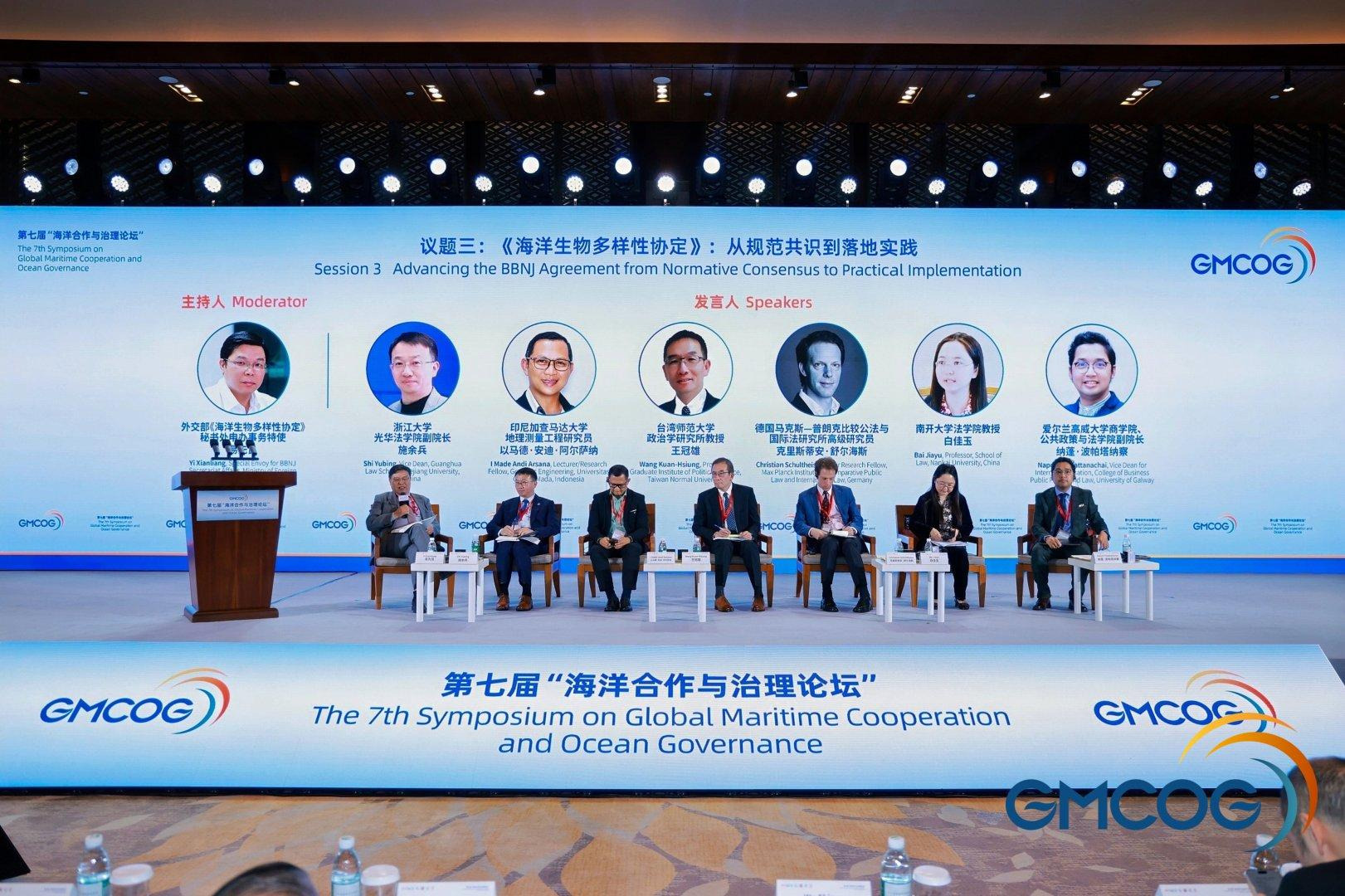
On the technical foundations of implementation, Shi Yubing, Professor and Vice Dean of Guanghua Law School, Zhejiang University, highlighted the clearing-house mechanism (CHM) as central to transparency and decision-making. He warned that digital divides could produce unequal benefits and called for minimum disclosure standards, tiered access and financial support. I Made Andi Arsana, Lecturer and Researcher in the Department of Geodetic Engineering, Universitas Gadjah Mada, stressed geospatial mapping, ecological data and the connections among marine areas. They suggested that information systems must be interoperable and accessible to developing States.
On geopolitics and equity, Wang Kuan-Hsiung, Professor at the Graduate Institute of Political Science, Taiwan Normal University, argued that recognizing the high seas as a global commons, prioritizing scientific evidence and integrating traditional knowledge could help prevent the BBNJ Agreement from becoming another arena for strategic competition. His emphasis on trust, finance and technology reinforced a recurrent theme of the Symposium: conservation beyond national jurisdiction cannot be separated from equity.
On institutional coherence, Bai Jiayu, Professor at Nankai University Law School, underscored coordination and cooperation with relevant instruments, frameworks and bodies. She interpreted the "not undermine" principle as a basis for mutual adjustment and constructive action rather than passive avoidance of duplication. Christian Schultheiss, Senior Research Fellow at the Max Planck Institute for Comparative Public Law and International Law, focused on procedures for establishing marine protected areas where maritime jurisdiction remains disputed. He suggested narrowing disagreements over decision-making rules rather than allowing objections to operate as an effective veto.
Naporn Popattanachai, Assistant Professor in Environmental and Marine Law at the School of Law, University of Galway, examined opportunities and constraints for developing States. He identified tensions among the common heritage of humankind, high-seas freedoms and intellectual-property protection, while emphasizing cumulative environmental impacts and the difficulty of monitoring activities beyond national jurisdiction. On capacity-building, he stressed that assistance should identify each State's actual capacity gaps rather than assume a uniform model of implementation.
Beyond the dedicated session, participants from small island and developing countries linked implementation to accessible finance, scientific and legal expertise, and equitable benefit-sharing. Other speakers emphasized that credible environmental assessment and conservation measures require independent research and closer integration of scientific evidence into legal decision-making. These discussions linked global rules to national capacity and sustained international support.
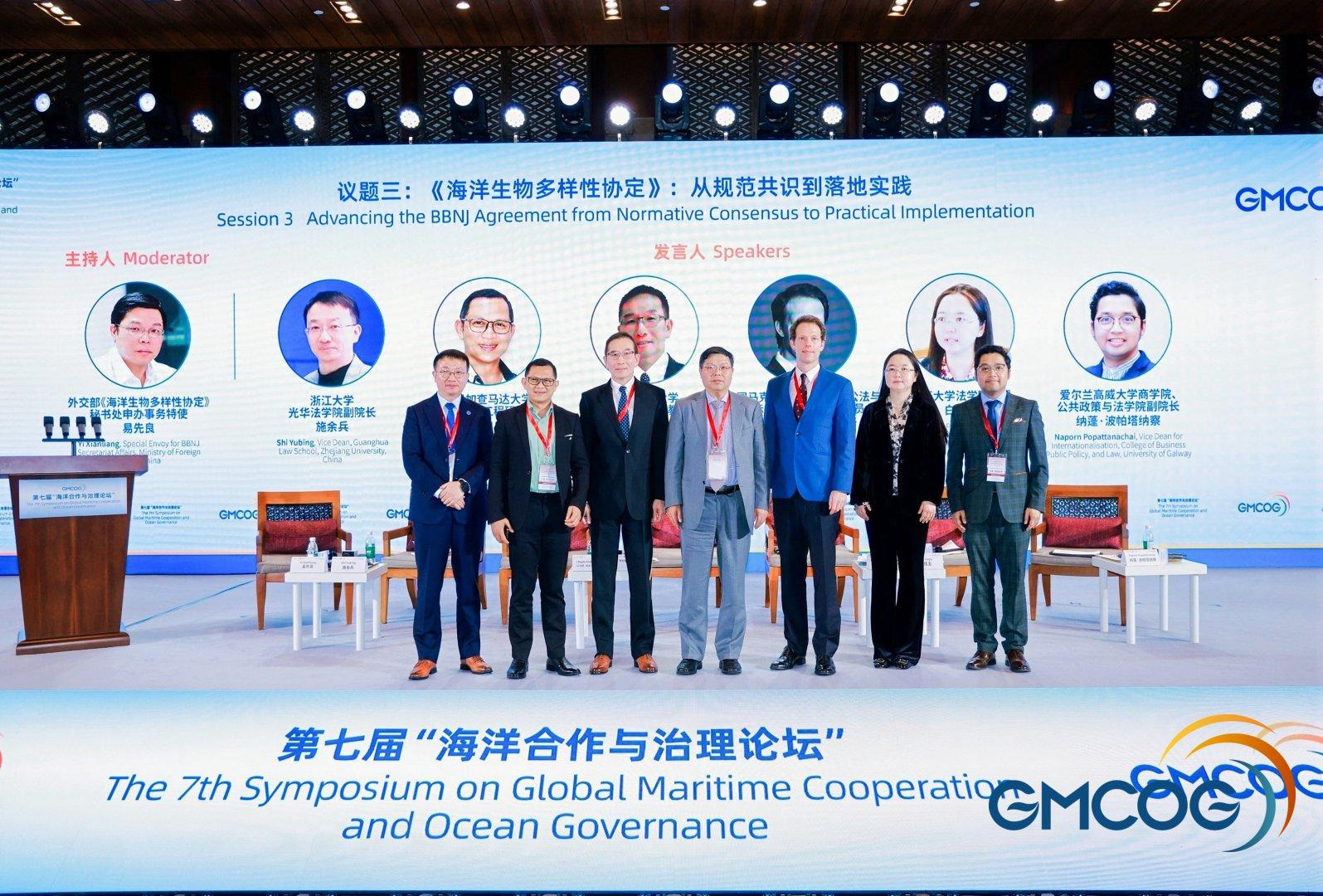
Panelists concluded that the BBNJ Agreement is neither a self-executing conservation regime nor merely a diplomatic symbol. Its effectiveness will depend on the development of procedural rules, scientific institutions and resource commitments. The discussions thus pointed to a practical pathway for implementation: preserving legal coherence, grounding decisions in independent science and ensuring meaningful participation by developing States.
Media Contact:
Company: Huayang Center for Maritime Cooperation and Ocean Governance
Contact Person: Jason
Email: yanzhi.diao@aoss.tv
Website: https://www.huayangocean.com/
SOURCE: Huayang Center for Maritime Cooperation and Ocean Governance
View the original press release on ACCESS Newswire