

Profit leaks usually start quietly. A small plumbing bill. One slow-paying tenant. A repair you meant to price-shop but handled in a rush. Then, before you know it, a rental that looked healthy on paper starts feeling a little thin.
Since 2021, repairs and maintenance costs have risen nearly 28%, while Net Operating Income (NOI) has increased just 10%. That gap is painful if you are not watching the numbers closely.
This guide walks through practical ways to track costs, budget smarter, protect cash flow, plan for taxes, and decide when outside help is worth it.
Essential Rental Property Expenses Every Landlord Should Track
Managing rental property expenses well starts with visibility. You need to know what leaves your account every month, what hits once or twice a year, and what tends to pop up at the worst possible moment.
Core Costs That Belong in Every Tracker
Most owners should track mortgage payments, insurance, property taxes, repairs, utilities, landscaping, pest control, legal fees, leasing costs, and administrative tools. For cleaner records, sort expenses for landlords by property, vendor, date, and tax category.
If you want fewer late-night repair headaches and more organized reporting, Specialized Property Management a professional team can support maintenance coordination, tenant screening, rent collection, and owner updates.
Build a Digital Expense Tracker
A spreadsheet can work if you actually update it every week. But landlord software is usually better for receipts, mileage, invoices, rent deposits, and repair notes. Once your regular expenses are listed, the next job is catching the costs that are easy to overlook.
Overlooked Expenses That Drain Your Rental Profits
Some expenses look harmless at first. The trouble is repetition. A fee here, a minor repair there, and suddenly the annual total is not so minor.
Hidden Costs Owners Forget
Vacancy loss, HOA dues, city registration fees, lock changes, eviction filings, and advertising can quietly eat into profit. Emergency repairs are especially rough because you often pay rush pricing and have fewer vendor options.
Smart Tools for Oddball Expenses
Receipt-scanning apps and cloud accounting tools can tag unusual costs before they disappear inside a cluttered bank statement. Tracking helps, of course, but tracking alone is not a strategy. You still need a plan.
Smart Budgeting Techniques for Rental Property Owners
Once the numbers are visible, rental property budgeting turns information into decisions. A good budget does not need to be complicated. It needs to be honest, repeatable, and easy to review.
A Simple Budgeting Method
Start with rent income. Subtract fixed costs. Estimate variable costs. Then set aside reserves before you count anything as profit. Some of the best property owner tips are also the simplest: do not treat leftover cash as spendable too early.
Sample Rental Property Budget Template
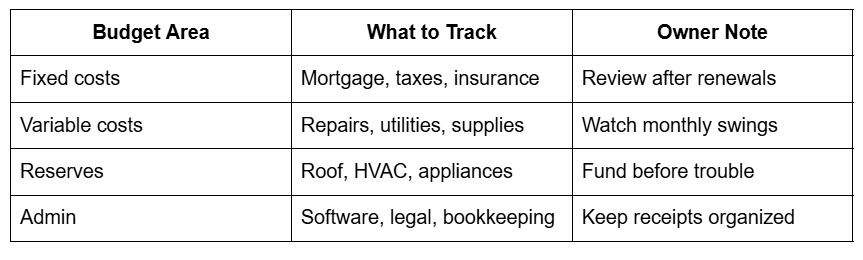
A working budget helps with day-to-day decisions. Still, large repairs deserve their own line of defense.
Budgeting for Long-Term Repairs and Capital Expenditures
Big repairs rarely arrive when it is convenient. A roof does not care that tax bills are due. An HVAC system does not wait until your cash flow feels comfortable.
Plan for Big Replacements
Roofs, HVAC systems, water heaters, flooring, and exterior paint should each have a reserve line. NCREIF data show an average expense-to-income ratio of about 35% for twentieth-first-century commercial real estate, while single-family rentals averaged 41% over 1986–2014.
Use Forecasting Tools Carefully
AI-powered maintenance tools can help flag likely replacement windows based on age, service history, and local weather. They are not magic, but they can give you a useful heads-up. With reserves in place, you can start lowering costs without cutting corners on property quality.
Proven Strategies for Reducing Rental Property Costs
Cost control is not the same thing as postponing needed work. In fact, delaying repairs often costs more. The better approach is to catch small issues before they grow teeth.
Preventive Maintenance Pays
Regular HVAC service, gutter cleaning, leak checks, and pest prevention often cost less than emergency calls. When managing rental property costs, schedule seasonal inspections before peak repair seasons. It is much easier to fix a small leak than replace damaged drywall later.
Buy Smarter, Not Cheaper
Energy-efficient lighting, low-flow fixtures, durable flooring, and bulk service agreements can reduce repeat spending. The goal is not to buy the cheapest item on the shelf. It is to buy what lasts, performs well, and saves you from doing the same job twice.
Professional Management and Expense Control
Professional management is not only about convenience. For many owners, it is about systems, documentation, vendor coordination, and fewer costly mistakes.
Where Managers Save Money
A strong manager can screen tenants, reduce vacancy time, coordinate vendors, document repairs, and keep lease terms clear. That structure helps prevent missed rent, damage disputes, weak records, and avoidable confusion.
Know the Real ROI
Management fees should be compared against your time, vendor markups, vacancy loss, legal exposure, and administrative stress. Cutting expenses improves cash flow, but keeping more of what you earn also depends on tax planning.
Tax Deductions and Incentives Every Landlord Should Know
Tax savings depend on clean records and qualified advice. Still, every owner should understand the categories that commonly matter.
Common Deductible Costs
Mortgage interest, repairs, insurance, property taxes, professional fees, advertising, mileage, software, and management fees may be deductible. Some expenses for landlords get missed for one frustrating reason: the receipt was never saved.
Don’t Miss Depreciation and Local Credits
Depreciation can reduce taxable rental income. Some cities or utilities also offer credits for energy upgrades. Those savings are useful, but they can be hard to claim if your records are scattered across emails, drawers, and old bank statements.
Using Technology to Simplify Rental Expense Management
Good technology makes boring work less painful. That may not sound exciting, but when tax season arrives, you will be glad you used it.
Apps Worth Considering
Look for software that handles rent collection, receipt capture, bank syncing, repair notes, and owner reports. A useful dashboard should show income, unpaid bills, reserves, and property-by-property cash flow.
PropTech Trends to Watch
More tools now use alerts, photo records, smart locks, water sensors, and maintenance prediction. When your tools are set up correctly, rental property budgeting becomes far easier to repeat month after month.
Practical Tips for First-Time Landlords Managing Rental Budgets
New landlords often underestimate how quickly expenses show up. That is normal. The key is building simple habits before a problem forces you to.
Start-Up Planning
Before the first tenant moves in, budget for cleaning, locks, safety checks, photos, ads, lease prep, and possible vacancy. Practical property owner tips include opening a separate account and paying every rental bill from that account.
Recurring Cost Habits
Review rent, repairs, insurance, and taxes every month, not once a year. Strong habits protect profits. Still, mistakes happen when owners stop checking the numbers.
Common Mistakes Property Owners Make with Rental Property Expenses
Most expense problems do not begin as disasters. They begin as small gaps that repeat over time.
Mistakes That Hurt Cash Flow
Owners often underestimate repairs, ignore vacancy risk, forget inflation, delay inspections, and mix personal funds with rental funds. A quarterly audit of rental property expenses can catch these issues before they become expensive.
How to Audit Your Costs
Compare each month against your budget, flag unusual charges, and review vendor pricing. If one category keeps running high, do not shrug it off. That pattern may be telling you something important.
Building a Resilient Emergency Fund for Rental Properties
An emergency fund keeps pressure from turning into panic. It also gives you room to make better decisions during repairs, vacancies, or tenant problems.
What Your Reserve Should Cover
Your fund should cover insurance deductibles, urgent repairs, missed rent, legal costs, and temporary vacancy. The right amount depends on the property’s age, condition, rent level, and risk profile.
Create a Reserve Calculator
Use a simple calculator with fields for monthly rent, expected repairs, insurance deductible, and vacancy risk. Once your reserves and systems are in place, it becomes easier to see what better cost control can actually do.
Final Thoughts on Managing Rental Property Expenses
Taking control of costs does not require perfection. It requires honest records, steady reviews, realistic reserves, and tools that make the work easier.
A free rental property budgeting worksheet can help organize income, fixed costs, repairs, reserves, and tax records in one place.
For customized advice, speak with a property management expert who understands maintenance, compliance, tenant issues, and reporting. The sooner your numbers are clear, the stronger your rental decisions become. Start there, and you give your investment a much better chance to breathe, grow, and pay you back.
Common Questions About Rental Cost Control
What is the 50% rule in rental property?
The 50% rule says operating costs may take about half of gross rent, excluding mortgage payments. It is a rough screening tool, not a final budget, because property age, taxes, insurance, and location can change the math.
What is the 3-3-3 rule in real estate?
The 3-3-3 rule is often used as a simple growth idea: buy three properties, wait three years, then repeat if finances allow. It is not a law, and owners should check cash flow before expanding.
Can property owners pass all expenses onto tenants lawfully?
Usually, no. Lease terms, state law, local rules, and habitability standards control what tenants can be charged. Owners should avoid surprise fees and get legal advice before adding utility, repair, or service charges.