
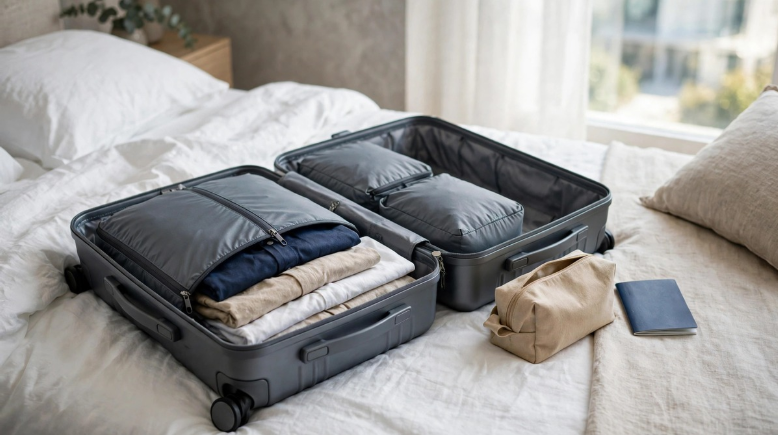
Every traveller knows the moment. The suitcase is full, the lid will not close, and you press down on a pile of clothes that shifts and wrinkles the moment you move. The problem is rarely how much you own. It is how the space inside the bag is used.
The fix is organisation, not force. A set of compression cubes turns one open suitcase into a set of small, flat drawers, each holding a category of clothes, pressed thin and stacked neatly. Used well, they are the difference between a bag that bursts open and a bag that closes with room to spare.
This guide explains how compression cubes work, how to choose the right sizes, and how to pack them so your clothes arrive neat and your bag stays easy to live out of.
What Are Compression Packing Cubes?
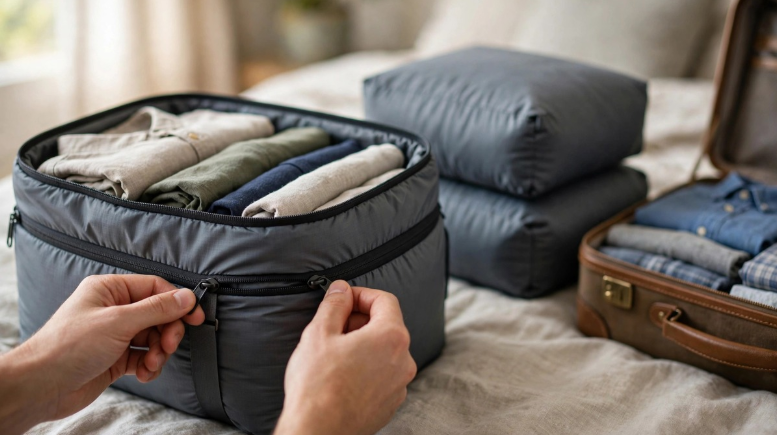
A compression packing cube is a lightweight, zippered pouch for clothes, with one important addition: a second zipper that runs around the middle of the cube. You fill the cube, close the main zip, then close the compression zip, which pulls the two halves together and presses the clothes flat, squeezing out some of the air trapped between layers of fabric. It works mechanically, and it does not remove all the air the way a vacuum-sealed bag does. The result is a flat, firm packet that stacks neatly instead of a soft pile that spreads and shifts.
Most cubes are made from lightweight, tear-resistant nylon, with a mesh panel in the top so you can see what is inside without opening every pouch. They come in sets, usually in a mix of sizes, and weigh very little on their own, so they add organisation without adding much weight to your bag.
They also keep your clothes organised on the journey. Each cube holds one category, so everything stays in its place, and when you arrive, the cubes lift out as they are, so unpacking takes a minute rather than a full repack of the bag. One thing they do not do is keep water out: ordinary compression cubes are not waterproof, so a leaking bottle can still soak through the fabric. Keep anything that might leak in a separate bag of its own.
How Compression Cubes Save Space
The space saving comes from pressing clothes together, not from crushing them. Folded clothes trap air between layers, and that air takes up room. The compression zip presses the layers together mechanically and holds them there, squeezing out some of that trapped air. The saving comes from the clothes sitting flatter and tighter. It is real but modest: expect noticeably more room in the case, not twice the space, and the biggest gain is often how much easier the bag is to organise.
Compression saves space, not weight. A cube full of jeans weighs the same as the jeans on their own, so it will not rescue a bag that is over your airline's weight limit.
What compression cubes do best:
Keep clothes grouped by category, so you can lift out one cube instead of searching the whole case.
Hold folded clothes flat, which can reduce creasing, although pressing a cube too flat can add creases of its own, so firm is better than forced.
Make repacking quick: dirty laundry goes back into its own cube at the end of each day.
Let you unpack in seconds by moving cubes straight into a drawer or onto a shelf.
Choosing the Right Sizes
Sets usually include four sizes, and each size has a natural job. The table below shows how most travellers use them.
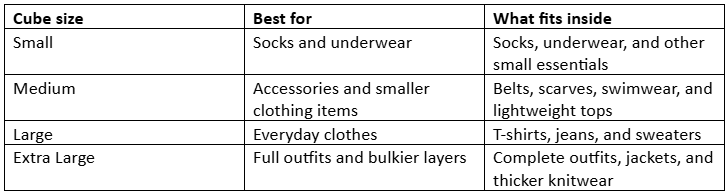
Two things do not belong in a cube with clean clothes. Shoes should travel in separate shoe bags, which keep dirt and odour away from your clothes and make the shoes easy to find. Toiletries belong in a dedicated toiletry bag that closes securely, so a leak stays in the bag instead of reaching your clothes.
A six-piece set, with a mix of these sizes, covers a week-long trip for most travellers. If you are packing for a carry-on only, two large cubes and one small cube will usually do the job. For a longer trip or a checked bag, add the extra-large cube for jackets and bulkier layers.
How to Pack Compression Cubes Step by Step
The method matters more than the cubes themselves. Packed well, a cube stays flat and firm. Packed badly, it bulges and wastes the space it was meant to save.
Sort before you pack. Group clothes by category, one cube per group, so nothing is buried.
Fold, do not stuff. Lay clothes flat, fold them to the size of the cube, and smooth out air as you go.
Fill the cube firmly, but leave a finger's width of room. An overstuffed cube will not compress and strains the zip.
Close the main zip, press the cube flat, then close the compression zip slowly and evenly.
Stack cubes flat in the case, heaviest at the bottom near the wheels, and fill gaps with soft items.
Compression Cubes vs Regular Packing Cubes
Regular packing cubes organise. Compression cubes organise and compress. The difference is the second zipper, which adds a little weight and one more step, in exchange for a flatter, firmer result. For a short trip with a half-empty bag, regular cubes are enough. For a full carry-on or a week in one bag, compression earns its place.
Mistakes to Avoid
Overstuffing the cube, which stops the compression zip from closing and creases everything inside.
Compressing structured jackets or delicate knitwear too hard. Fold them loosely or leave them out.
Forgetting the weight limit. A compressed cube weighs the same as the clothes inside it, so weigh the packed bag at home.
Using one giant cube for everything. Several smaller cubes organise better and fit the case more neatly.
Are Compression Cubes Worth It?
When they earn their place
They are worth it for carry-on-only trips, frequent travellers, and anyone who lives out of a suitcase for a week at a time. They are also useful for families, where each person gets a cube of their own, and nobody has to dig through anyone else's clothes.
When you can skip them
If you usually check a large bag with room to spare, or you travel with very little, the extra zippers add little. Careful folding will do the same job.
Pack Flatter, Travel Lighter
Compression cubes will not change what you own, but they change how your bag behaves. Clothes stay grouped, flat, and easy to find, and the case closes without a struggle. Pack them well, choose the right sizes, and the humble cube becomes one of the most useful things you own.