
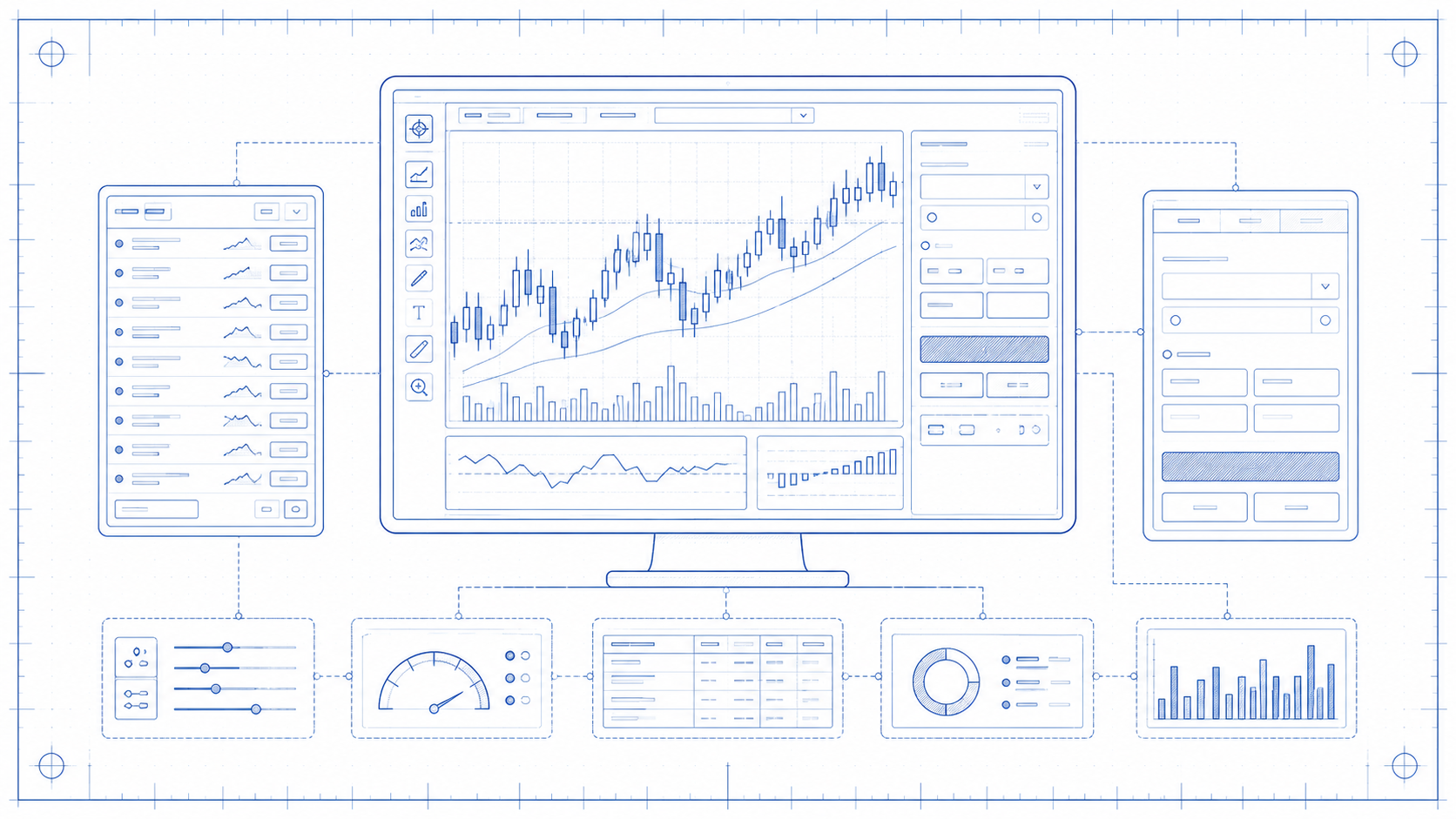
Blueprint-style diagram of an online trading platform dashboard with charts and order panel
Choosing an online trading platform comes down to three things: what you can trade, what it actually costs you, and how well your money is protected if something goes wrong. The marketing pages tend to lead with app design and account bonuses, which matter far less than the basics. This guide walks through what to check before you open an account, in plain terms, so you can compare platforms on the things that affect your money.
What does an online trading platform actually do?
An online trading platform is the software, website, or app you use to buy and sell financial instruments yourself. It shows you live prices, lets you place and manage orders, and gives you charts and other tools to research what you are trading. Some platforms are run by a single broker. Others, like MetaTrader, are licensed out and used by many different brokers, so the same interface can look identical across otherwise unrelated companies.
What can you actually trade, and how is a CFD different from owning a share?
Most platforms offer a mix of instruments: shares, exchange-traded funds, forex, commodities, indices, and contracts for difference, known as CFDs. Buying a share means you own a small part of a company and can hold it for as long as you like. A CFD is a contract on an asset's price movement between when you open and close the position. You never own the underlying asset.
CFDs are usually traded with leverage, meaning your deposit, or margin, controls a larger position than the money you put down. That magnifies both gains and losses, so a modest price move against you can cost more than it would with an unleveraged share purchase.
Costs that matter more than the headline spread
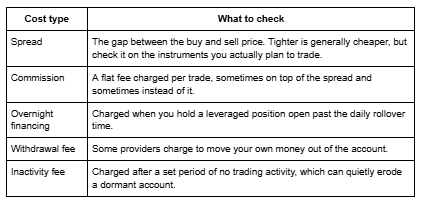
Platforms advertise their tightest spread on their most popular instrument, which is not always representative of what you will actually pay. Several other costs affect your returns just as much.
Regulation and safety: what to check before you fund an account
Regulation varies by country, so the authority you should check depends on where you live and where the broker is licensed. Depending on the region, that might be the FCA in the UK, CySEC in Cyprus, ASIC in Australia, or the FSCA in South Africa. A properly regulated broker will list its licence number, and you can look that number up directly on the regulator's own public register rather than trusting a badge on the broker's homepage.
CFD trading carries real risk regardless of which regulator oversees the provider. Regulators across the European Union analysed retail CFD trading and found that between 74% and 89% of accounts lose money, according to the European Securities and Markets Authority. Reputable, regulated brokers are required to disclose a version of this figure themselves.
A short checklist before you open an account
- Confirm the licence directly on the regulator's register, not just the broker's own site.
- Check whether client funds are held in accounts segregated from the company's operating money.
- Look for negative balance protection, which caps your losses at what is already in your account.
- Open a trading platform demo account first, and test order execution before funding it with real money.
- Compare withdrawal times, not just how quickly deposits are processed.
- Check whether education resources and customer support are genuinely useful, not just a chatbot pointing back to a help page.
Common questions
Is one trading platform better than all the others? No single platform is best for everyone. The right choice depends on what you want to trade, how much you plan to trade, and how much hands-on support you want along the way.
Do I need a lot of money to start? Minimum deposits vary widely, and many platforms let you open a demo account with no money at all. Test the platform before deciding how much to commit.
What is the safest way to start if I am new to trading? Practise on a demo account first, start with a small amount of real money once you switch over, and treat any losses as the cost of learning rather than a setback to chase back quickly.
Can I lose more money than I deposit? With CFDs, that depends on whether the provider offers negative balance protection. Regulated brokers in most major markets are required to include it, but confirm it directly before you fund an account.
Is a free demo account worth using? Yes. It will not replicate the emotional pull of real money on the line, but it does let you learn the platform's mechanics and test your approach without financial risk.
Choosing a trading platform is less about picking the flashiest app and more about checking the regulation, understanding the real costs, and confirming your money is protected. Do that homework first, and the platform itself becomes a much smaller decision.